
Locate Leaks Beneath Concrete
Concrete Slab Leak Detection in Abilene
Narrow the suspected leak before opening concrete or flooring. Get a Free Estimate
Locate Leaks Beneath Concrete
Narrow the suspected leak before opening concrete or flooring. Get a Free Estimate
Concrete makes a durable foundation, but it also hides the plumbing routed beneath or through it. When one of those lines develops a leak, the water may travel away from the failure before it becomes visible. A damp floor in one room does not necessarily mean the pipe is leaking directly below that spot.
Concrete slab leak detection is the process of narrowing that hidden source using plumbing behavior, testing, temperature differences, sound, layout information, and other available evidence. At Slab Leak Detection Abilene, the goal is to reduce the search area as much as reasonably possible before a repair opening is considered. That can save time, limit unnecessary disruption, and help the repair start with a clearer target.
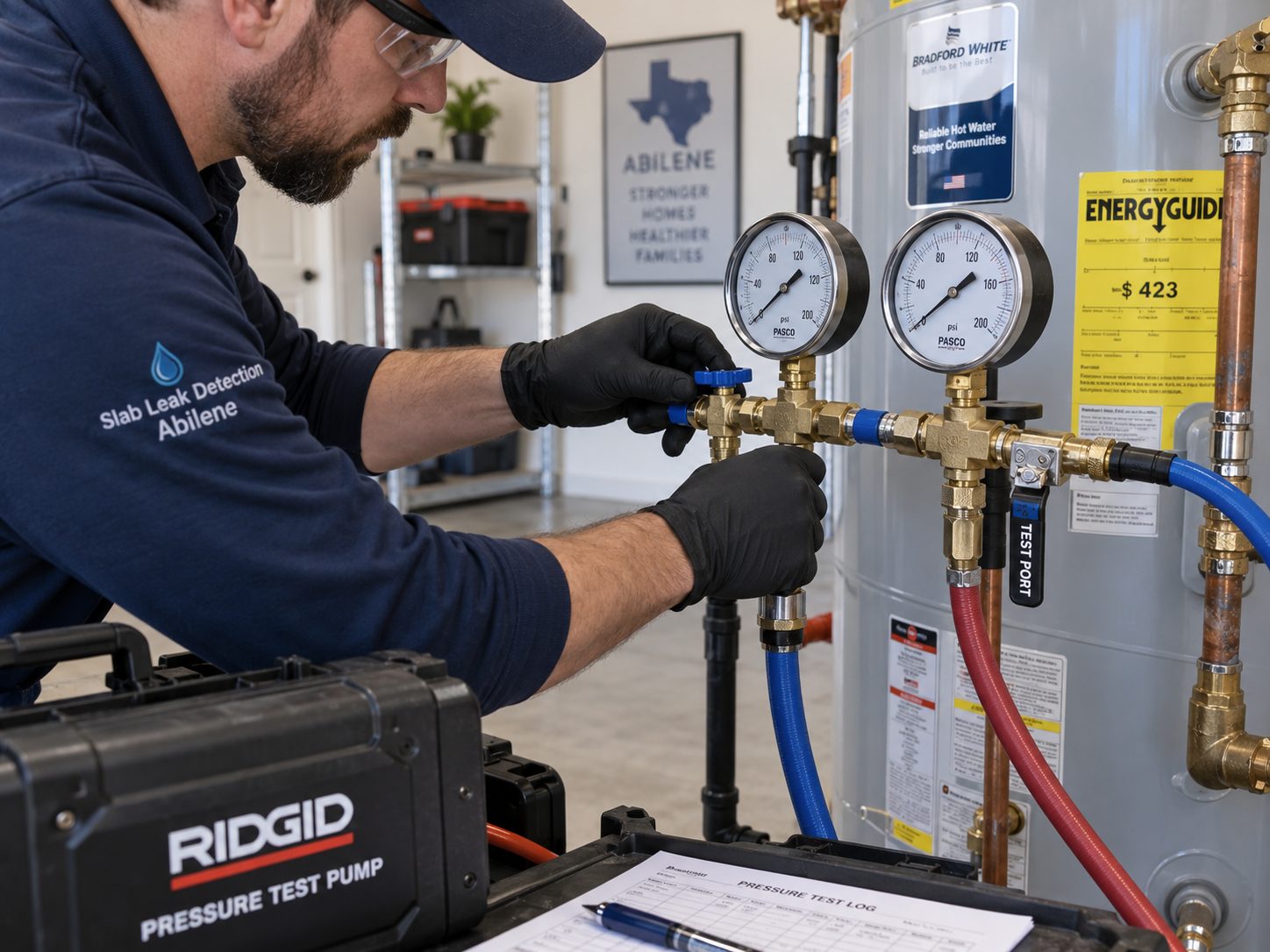
Water, heat, and sound can all travel through or around a slab. Reliable detection therefore depends on interpreting patterns rather than assuming the first visible symptom marks the exact leak point.
Escaping water may follow cracks, pipe channels, soil conditions, joints, or other paths before it appears at a floor edge or finished surface. That means visible moisture can be some distance from the actual plumbing failure. Detection aims to separate the place where water becomes visible from the place where it is most likely leaving the pipe.
A leaking hot-water line can sometimes create a temperature pattern at the floor surface. Temperature differences may help narrow the search area, but they need to be interpreted in context because sunlight, appliances, HVAC conditions, and construction details can also affect surface temperature. Heat is therefore treated as supporting evidence rather than an automatic pinpoint location.
Water escaping under pressure can create vibration or sound that transfers through piping and building materials. Listening methods can sometimes help identify the area where that signal is strongest. Background noise, pipe depth, flooring, water pressure, and soil conditions can affect what can be heard, so acoustic findings are normally considered with other test results.
Knowing where fixtures, water heaters, manifolds, and supply routes are located helps make detection more efficient. Even when the original plumbing plan is unavailable, the property's fixture arrangement can provide useful clues about probable pipe paths. Combining that layout with testing can help reduce the number of possible locations.
| Service | Estimated Cost | Average |
|---|---|---|
| Focused slab leak detection | $300-$600+ | Varies by property |
| Detection with multiple testing methods | $400-$800+ | Varies by complexity |
| Extended investigation | $500-$1,000+ | Varies by access |
These are broad planning ranges and not fixed prices. Detection cost depends on property size, plumbing access, floor coverings, leak behavior, system layout, and the amount of testing needed.
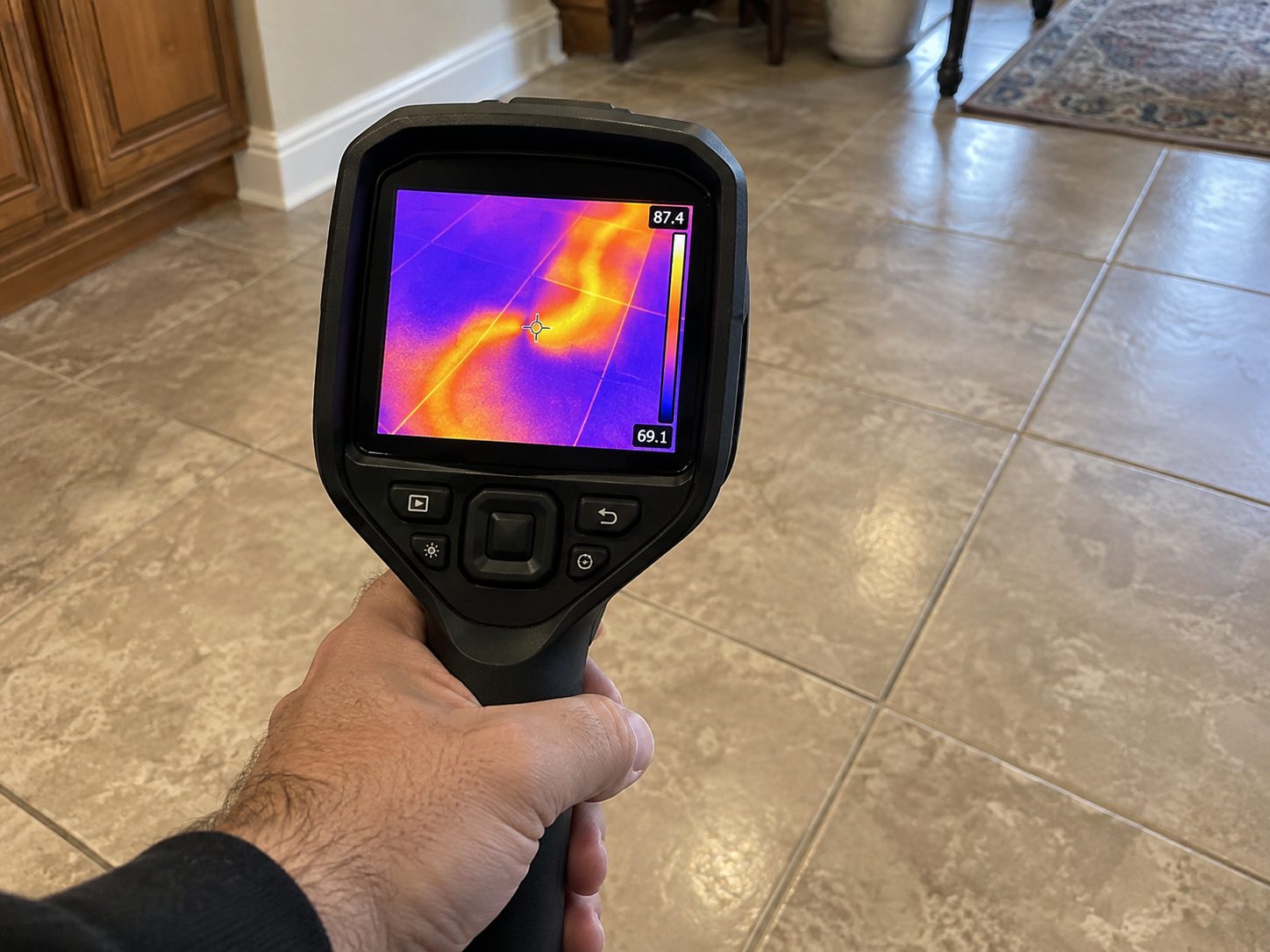
The purpose of detection is to reduce unnecessary exploratory demolition and give the repair a better starting point.
We compare plumbing tests, visible conditions, temperature patterns, sound, and likely pipe routes instead of relying on a single clue.
Conditions beneath a slab are hidden, so no responsible detection process should pretend every case is identical. We explain what the evidence supports.
We focus on producing information that can actually help determine the next practical step, not simply identifying a general area of concern.
Before concrete is opened, get a clearer idea of where the hidden leak is likely to be.
Free — no obligations
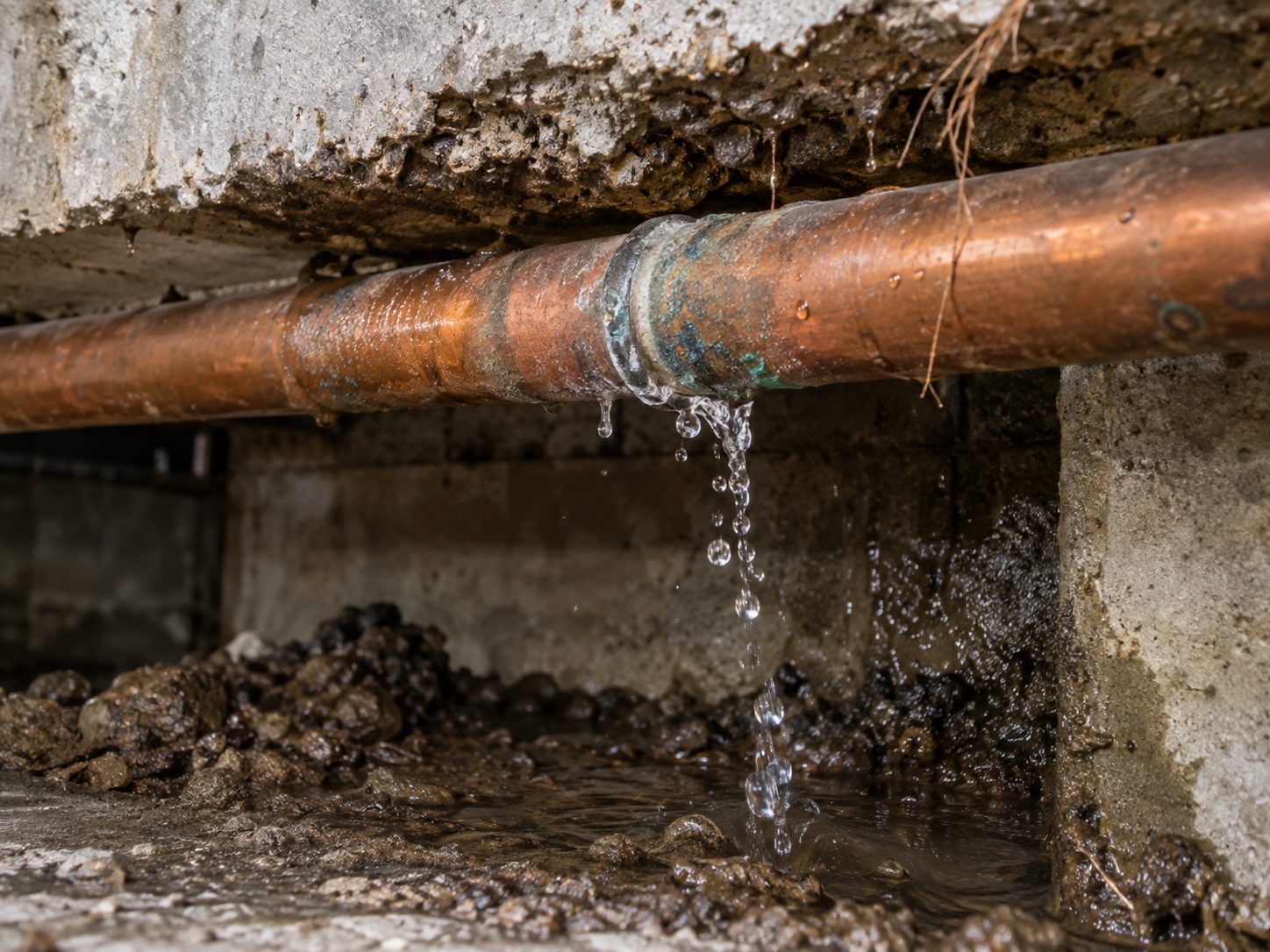
We review symptoms and testing so the detection work is aimed at a supported plumbing problem rather than unrelated moisture.
System behavior and isolation findings can help determine which portion of the water piping deserves closer attention.
Available temperature, sound, layout, and physical clues are compared to reduce the likely location.
We explain where the findings point and what factors should be considered before opening flooring or concrete.