Start With the Evidence
Slab Leak Inspection in Abilene, TX
Have suspicious symptoms? Start with a focused inspection. Book Now
Start With the Evidence
Have suspicious symptoms? Start with a focused inspection. Book Now
A high water bill or damp floor can point toward a slab leak, but it can also have other causes. A slab leak inspection is the first step toward understanding whether the plumbing beneath the concrete should actually be suspected. We look at the pattern of symptoms instead of assuming that one warning sign proves the diagnosis.
Slab Leak Detection Abilene provides focused inspections for properties throughout the Abilene area. We review water-use behavior, visible moisture, unusual sounds, warm areas, pressure concerns, plumbing layout, and other clues that can help determine what testing should follow. The purpose is not simply to say that a leak might exist. It is to build a useful picture of where the problem may be and which part of the system deserves closer attention.
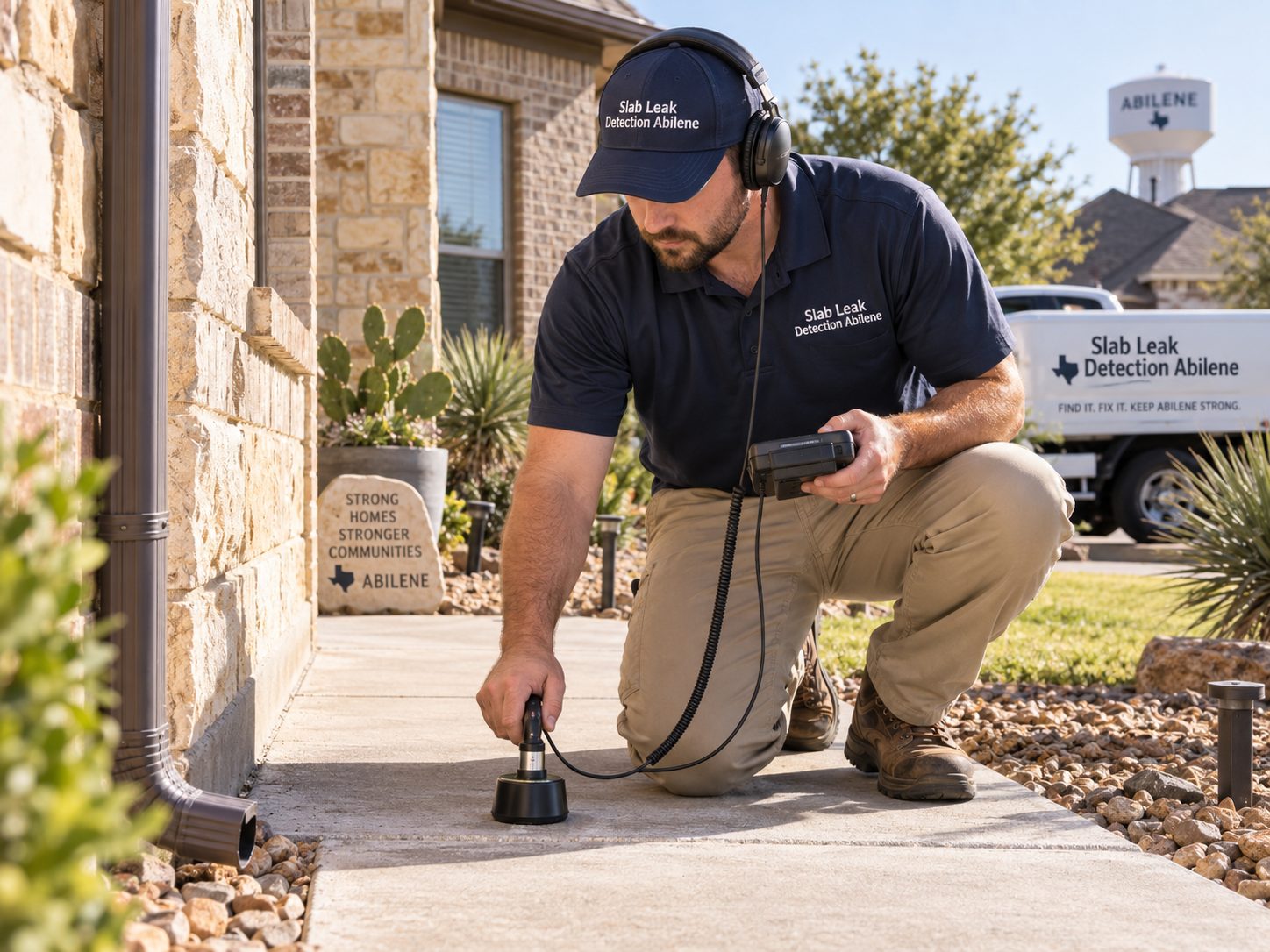
Good leak detection begins with observation. The property often provides several clues, but those clues become more useful when they are considered together.
A water meter that continues to show consumption when plumbing fixtures and water-using appliances are off can be an important sign of an active leak. We look at whether the usage pattern appears continuous and whether there are obvious above-ground explanations. Water bills can also provide context, particularly when normal household habits have not changed. A sudden or persistent increase does not identify the location by itself, but it can support the need for further testing.
A warm area on the floor may point toward hot water escaping beneath the slab, while damp flooring can indicate moisture reaching finished surfaces. However, flooring conditions, sunlight, appliances, drainage problems, and other moisture sources can sometimes produce similar symptoms. We treat these observations as clues and compare them with the rest of the plumbing behavior before deciding whether a slab leak is likely.
Some leaks are accompanied by a change in water pressure or fixture performance. If the plumbing system is losing water continuously, the effect may be noticed at showers, faucets, or other fixtures, particularly when multiple water demands occur at once. Pressure concerns can have causes unrelated to slab leaks, so they are considered alongside meter readings, system testing, and the property's plumbing configuration.
Water appearing along the edge of a slab or in soil close to the foundation can sometimes be associated with a hidden plumbing leak. Irrigation, drainage, condensation, roofing runoff, and groundwater conditions can also contribute to exterior moisture. An inspection looks for patterns that help distinguish plumbing-related water loss from those other possibilities.
| Service | Estimated Cost | Average |
|---|---|---|
| Initial slab leak inspection | $150-$400+ | Varies by property |
| Inspection with additional testing | $250-$650+ | Varies by scope |
| Extended locating work | $400-$800+ | Varies by complexity |
These figures are broad planning ranges only. The final cost depends on property size, system layout, symptoms, accessibility, and the testing needed to reach a useful conclusion.
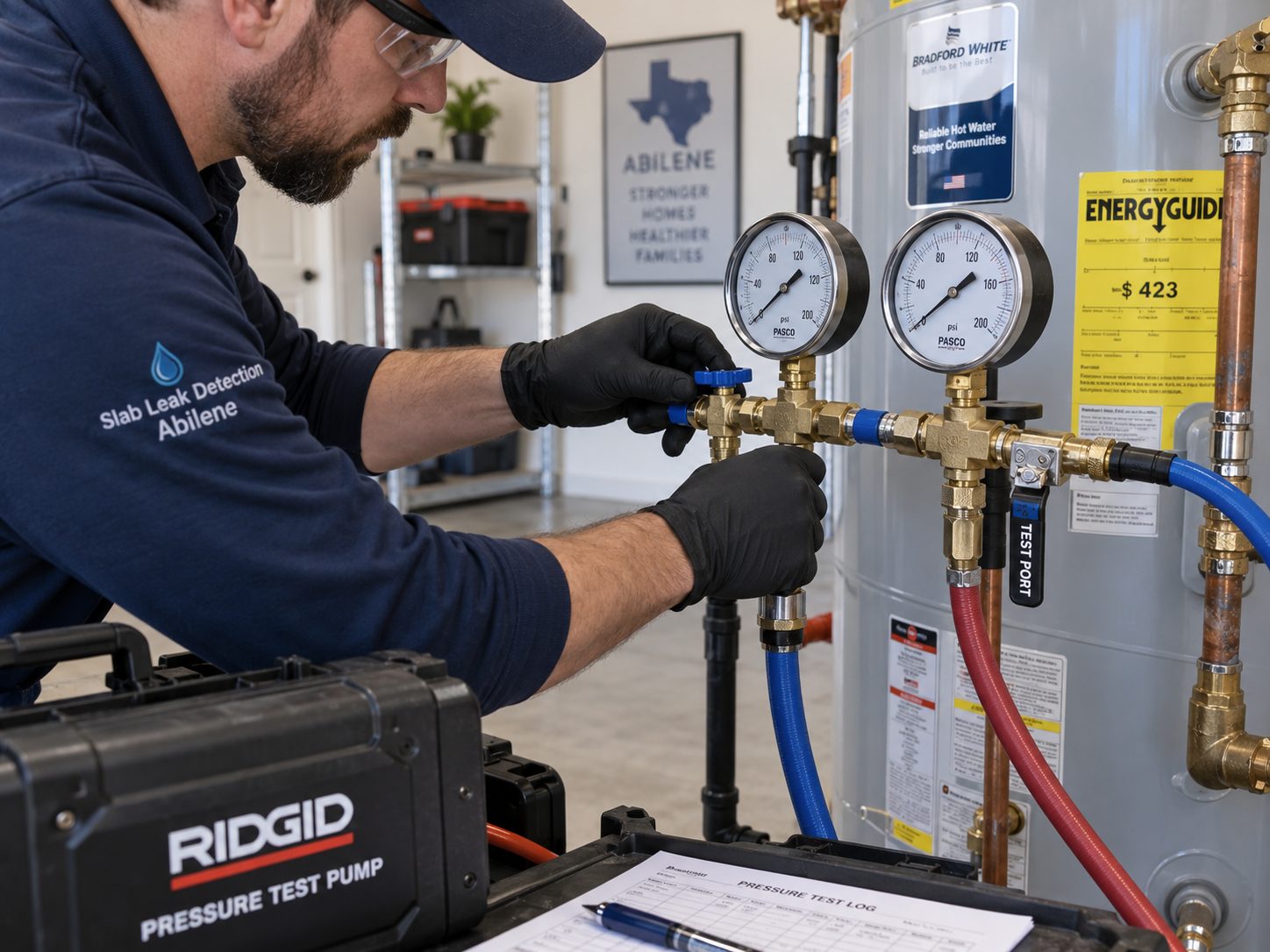
Moisture and high water use can have many causes. We start by investigating whether the evidence actually points toward a slab leak.
When symptoms started, whether they are constant, and where they appear can help narrow the investigation before more involved testing begins.
An inspection should leave you with a clearer direction, whether that means more testing, targeted detection, repair planning, or looking at another possible source.
We work across Abilene and nearby communities, bringing the inspection to the property where the symptoms can be evaluated directly.
Not sure whether your symptoms point to a slab leak? An inspection can help narrow the possibilities.
Free — no obligations
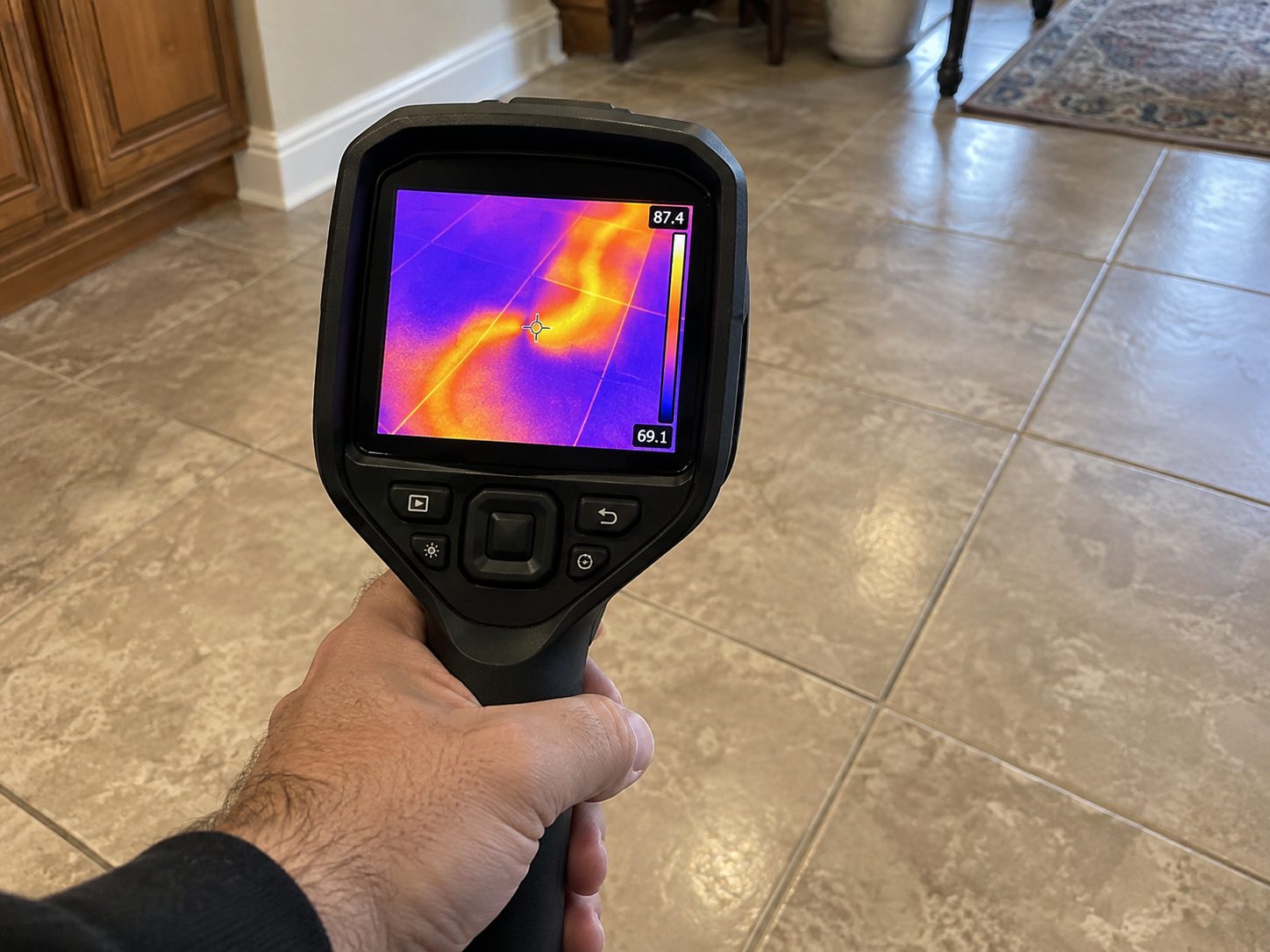
We review water bills, noises, warm spots, moisture, pressure changes, and how long the symptoms have been present.
Accessible plumbing, fixtures, appliances, exterior conditions, and other possible water sources are considered before the slab is blamed.
Meter activity and other plumbing behavior can help determine whether hidden water loss is likely.
If the evidence supports a hidden leak, we explain the most useful next step for confirming and locating it.